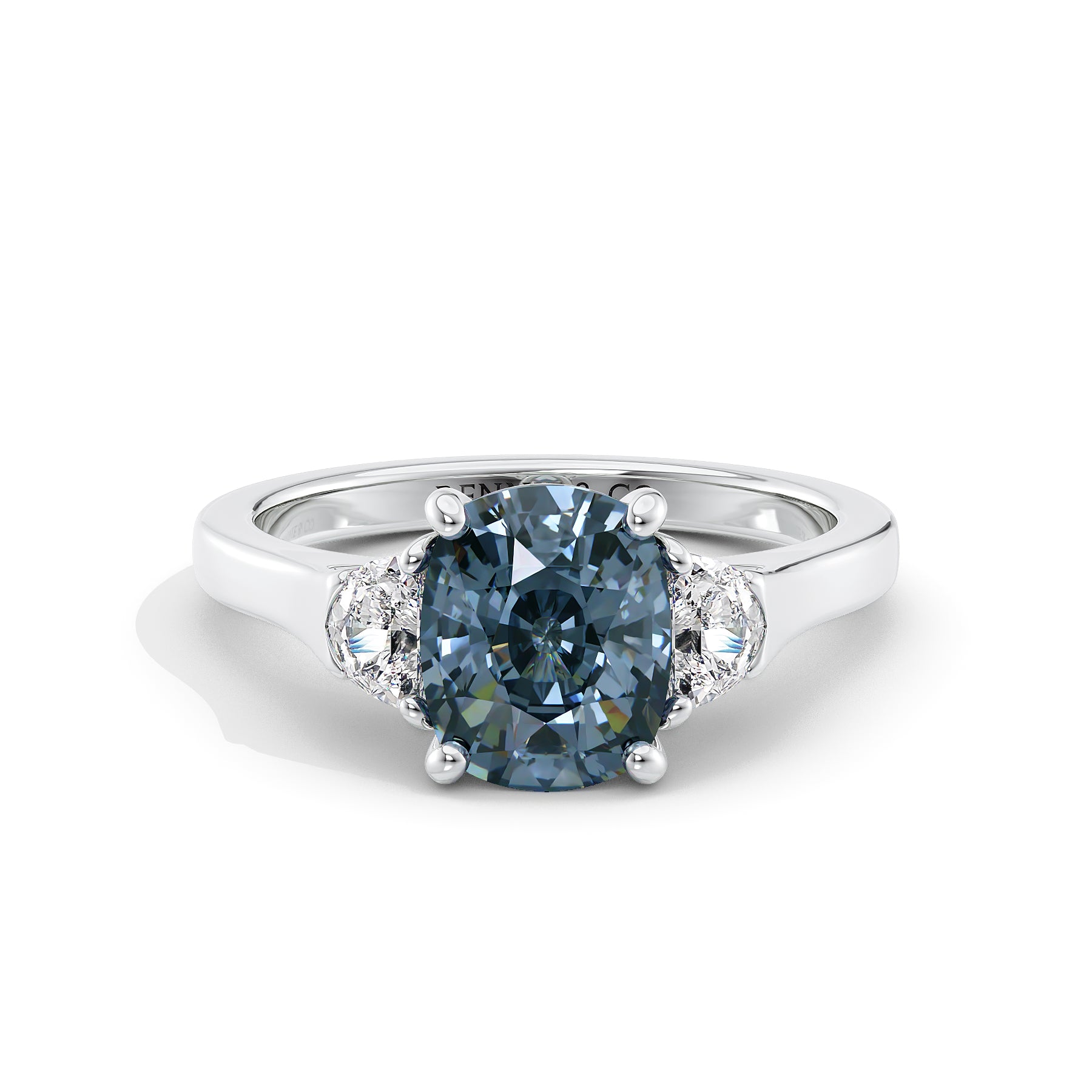
A ring that has become stuck on your finger can be uncomfortable and, if left for too long, potentially dangerous. Fingers can swell for a number of reasons, from hot weather and exercise to changes in weight, injury or fluid retention, making a ring that normally fits comfortably suddenly feel very tight.
In most cases, a stuck ring can be removed safely at home with a little patience and the right technique. However, it is important not to force it. Pulling aggressively or repeatedly trying to twist a tight ring can cause further swelling and make the problem worse.
Whether it is an engagement ring, wedding ring, eternity ring or another piece of jewellery you wear every day, here are some of the safest methods to try, along with advice on when to stop and seek professional help.
Why rings get stuck (heat, weight changes, swelling)
There are several reasons why a ring that normally fits well can suddenly become difficult to remove.
Heat is one of the most common causes. In warm weather, blood vessels dilate and fingers can swell slightly. This is why a ring may feel noticeably tighter during the summer or after spending time somewhere warm.
Weight changes can also affect how a ring fits. Even relatively small changes in weight can alter the size and shape of your fingers, particularly if the ring is already a close fit. Swelling can also occur after exercise, following an injury, as a result of fluid retention, or simply after wearing a ring continuously for an extended period.
The position of the ring can make a difference too. A ring that has rotated or moved towards the base of the finger may become more difficult to remove, particularly if the knuckle is wider than the base of the finger. If the finger is only mildly swollen and remains a normal colour, there are several methods worth trying.
The floss or string method, step by step
Dental floss or thin, strong string can sometimes help remove a ring that has become tightly wedged around the finger. The technique works by temporarily compressing the swollen part of the finger, allowing the ring to slide over the knuckle.
- Reduce the swelling first. Hold your hand above the level of your heart for several minutes. If possible, use a cool compress around the finger, but avoid applying ice directly to the skin.
- Thread the floss underneath the ring. Carefully slide a length of dental floss or thin string underneath the ring, leaving one end pointing towards your wrist.
- Wrap the finger. Starting immediately beyond the ring, tightly but carefully wrap the floss around the finger towards the fingertip. The aim is to compress the swollen tissue, not to cause pain or restrict circulation.
- Work towards the knuckle. Continue wrapping until you have covered the swollen section of the finger.
- Unwind the floss from underneath the ring. Take the end of the floss that is underneath the ring and begin unwinding it towards the fingertip. As the floss unwinds, the ring should gradually move towards the end of the finger and over the compressed tissue.
- Stop if there is pain or discolouration. If the finger becomes increasingly painful, numb, blue or pale, stop immediately and seek professional help. This method can be effective, but it should not be attempted repeatedly if the ring is causing significant discomfort or restricting circulation.

Lubrication methods that actually work
If there is enough space to move the ring slightly, lubrication can make a significant difference.
Soap and water is often the simplest option. Run your finger under cool or lukewarm water and apply liquid soap around and underneath the ring. Gently rotate the ring while applying light pressure towards the fingertip.
Other household lubricants can work too. Hand lotion or moisturiser can help reduce friction between the ring and the skin.
Whatever you use, avoid pulling the ring aggressively. Instead, gently rotate it backwards and forwards while gradually working it towards the end of the finger.
Cold water can also help reduce mild swelling. Avoid very hot water, as heat can increase swelling and make the problem worse. If lubrication and gentle movement are not working after a few attempts, it is better to stop rather than continuing to pull on the ring.
What never to do, and when to stop trying
The most important rule when removing a stuck ring is do not force it.
Repeatedly pulling, twisting or yanking a ring can irritate the skin and cause additional swelling. This can turn a ring that was only slightly tight into one that is considerably more difficult to remove.
Avoid using tools such as pliers or wire cutters yourself. Precious metals can be damaged easily, and attempting to cut a ring without the appropriate equipment can also result in injury.
You should stop trying to remove the ring if your finger becomes increasingly swollen, painful, numb or discoloured.
When to see a jeweller vs when it's urgent
A jeweller can often help when a ring is simply too tight and the finger itself is otherwise healthy.
An experienced Hatton Garden jeweller will have access to specialist jewellery tools and can assess whether a ring can be safely removed without causing unnecessary damage. At Rennie & Co, we regularly deal with rings that need to be removed, repaired, resized or restored, including precious metal engagement rings.
If necessary, a ring can sometimes be carefully cut to remove it from the finger. Depending on the design and condition of the ring, it may then be possible to repair and restore it afterwards.
However, a jeweller is not the right place to go if your finger is severely swollen, injured, numb or changing colour. If the ring is causing significant pain or appears to be restricting blood flow, seek urgent medical attention rather than continuing to try to remove it yourself. A medical professional can prioritise the condition of your finger and remove the ring safely if necessary.
If there is no immediate medical concern but the ring simply will not come off, visiting an established Hatton Garden jeweller can be a sensible next step.

Preventing it in future
If you have struggled to remove a ring once, it is worth considering whether it is still the correct size.
Finger sizes naturally fluctuate throughout the day and can change with temperature, weight and other factors. A ring that fits perfectly in cooler conditions may feel considerably tighter during hot weather.
This is particularly worth considering with rings that are worn every day, such as engagement rings, wedding rings and eternity rings. A ring that has gradually become tighter can be easy to ignore until it becomes difficult to remove.
If your ring regularly feels tight, it may be worth having it professionally assessed rather than waiting until it becomes stuck. Depending on the design, a jeweller may be able to resize the ring to provide a more comfortable fit.
Regular cleaning and inspection can also help identify problems before they become more serious. Keeping your ring clean and checking the setting, claws and band periodically is an important part of looking after fine jewellery.
For more advice on keeping your ring in good condition, see our engagement ring care guide.
A well-fitting ring should be secure without feeling restrictive. If you find yourself regularly struggling to remove it, it is usually better to have the fit checked by a professional rather than waiting for the next time it becomes stuck.